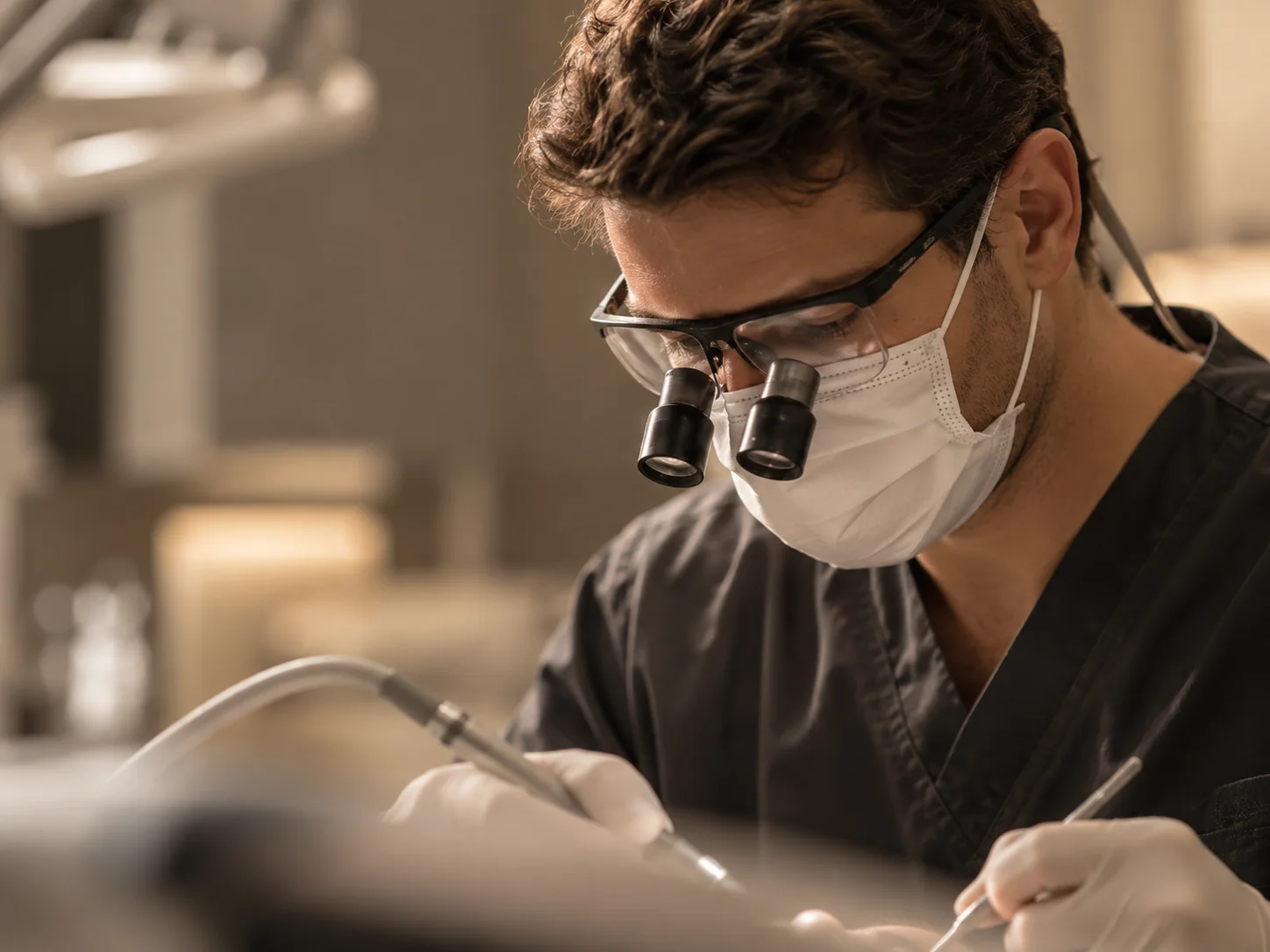
For me, Guided Biofilm Therapy has been a clear step forward from the traditional scale-and-polish model.
The traditional approach often centred on removing calculus first, polishing afterwards and instrumenting most tooth surfaces whether they needed it or not. GBT changes the sequence: assess, disclose, remove the biofilm first, then remove only the calculus that remains.
That sounds like a small change, but clinically it makes a lot of sense.
GBT is more than AIRFLOW
One of the biggest misconceptions is that GBT simply means using an AIRFLOW machine.
It doesn’t.
GBT is an eight-step, evidence-based and indication-led protocol built around prevention, periodontal therapy and maintenance. It includes assessment, disclosure, patient motivation, AIRFLOW, PERIOFLOW where indicated, PIEZON for remaining calculus, a final check and an individualised recall.
The important word is guided.
Once we disclose, we can actually see the biofilm — and the patient can see it too. Instead of simply saying, “You need to brush better around here”, we can show them exactly where the problem is.
My patients particularly like this step because it changes the appointment into something we are doing together. We are working towards their best oral health as a team, which can increase motivation and help them understand why both the treatment and their home care matter.
It also gives us a natural opportunity to discuss gingival inflammation, periodontal risk and the relationship between oral and wider systemic health — particularly the well-established two-way relationship between periodontal disease and diabetes.
Biofilm first, calculus second
This is probably the biggest change from the traditional scale-and-polish mindset.
Biofilm is central to caries, gingivitis, periodontitis and peri-implant disease. With GBT, we remove the disclosed biofilm first using AIRFLOW with PLUS Powder, before targeting the remaining calculus.
AIRFLOW can be used supra- and subgingivally up to around 4 mm, while PERIOFLOW allows us to manage biofilm in deeper periodontal and peri-implant pockets where clinically indicated.
Importantly, PERIOFLOW is not something I automatically use simply because a pocket is deep. The periodontal condition needs to be assessed first, and the technique selected according to the clinical situation.
Remaining hard deposits can then be treated selectively with PIEZON PS, rather than automatically scaling every surface.
That is what I like about the protocol: less unnecessary instrumentation, more targeted treatment and, importantly, greater comfort for the patient.
PLUS or CLASSIC powder — what’s the difference?
Not every AIRFLOW powder is designed for the same indication.
AIRFLOW PLUS Powder is the powder I use for the majority of treatment. It is erythritol-based, with a particle size of around 14 μm, and is designed for minimally invasive biofilm removal both supra- and subgingivally. It can be used on natural teeth as well as restorations, implants and orthodontic appliances.
AIRFLOW CLASSIC COMFORT Powder is different. It is a sodium bicarbonate powder with larger particles of around 40 μm and is particularly useful when dealing with heavier supragingival staining on appropriate enamel surfaces.
So, in simple clinical terms:
PLUS = everyday biofilm management and the more versatile, minimally invasive option.
CLASSIC = something I reserve for stubborn external staining on appropriate enamel surfaces.
The powder, surface and clinical indication should determine what we use.
Why I prefer it to a traditional scale and polish
A routine scale and polish can easily become instrumentation-focused: calculus, ultrasonic, hand scaling, rubber cup and paste.
GBT asks a different question:
What actually needs treating?
If a surface has biofilm but no calculus, I do not need to instrument it unnecessarily. Once the disclosed biofilm has been removed, remaining calculus is easier to identify and treat precisely.
For patients experiencing GBT for the first time, I also find it important to explain the final stages of the appointment. Many are waiting for the traditional rubber-cup “polish” because that is what they have always experienced.
I explain that AIRFLOW has already removed the biofilm and staining and polished the surfaces in a much less abrasive way, so routine polishing paste is not normally required as part of the GBT protocol.
Small details can improve the experience too. Where appropriate, I like using Optragate to gently retract the lips and cheeks. It can improve our access and visibility while also helping make treatment more comfortable for the patient.
For us, GBT can mean better visibility, more precise instrumentation and a more logical workflow.
For the patient, it can feel very different from the scraping-and-polishing appointment they may have expected.
It is not just for healthy patients
GBT is sometimes presented mainly as a premium hygiene treatment for stain removal, but clinically it goes much further than that.
I use its principles across prevention, periodontal therapy and maintenance, implants, orthodontics, restorative work and patients with sensitivity.
Periodontists also use AIRFLOW, PERIOFLOW and GBT principles within periodontal and peri-implant treatment and maintenance.
It is not a concept that belongs exclusively to hygienists. Dental hygienists, dental therapists, dentists, periodontists and other dental specialists can all incorporate GBT principles into appropriate areas of clinical care.
That multidisciplinary use is one of its strengths.
The patient education is as valuable as the technology
The machine is only part of it.
Disclosure gives us the opportunity to pause and involve the patient. We can show where biofilm is accumulating, discuss why, select appropriate interdental aids and then reassess those same areas at future visits.
That changes the appointment from:
“I cleaned your teeth.”
to:
“We identified the risk, treated it and showed you how to control it between appointments.”
It also gives us an opportunity to explain that oral health does not exist in isolation and to discuss relevant links between periodontal inflammation and systemic health where appropriate.
For me, this is a much better model of modern preventive dentistry.
Training — and maintenance — matter
Good equipment alone does not automatically produce good GBT.
Correct powder selection, angulation, distance, settings, PERIOFLOW indications, PIEZON technique, periodontal assessment and understanding when a particular technique is — and is not — appropriate all matter.
For clinicians already using EMS, one of my best pieces of advice is to check the wear of your PIEZON instruments regularly using the EMS PIEZON Instrument Check Tool. As the tip wears, clinical efficiency and predictability can fall and patient comfort can be affected. It is a very small check, but one that can make a noticeable difference to how effectively the instrument performs.
Good machine maintenance is another cornerstone of successful GBT. Correct depressurisation, proper reprocessing of the handpieces and daily use of NIGHT CLEANER all help keep the system working as intended and reduce the risk of biofilm or deposits building up within the waterlines.
It is also worth shaking the powder chamber before use so the powder remains free-flowing rather than settling, and making sure the chamber stays completely dry, as moisture can cause the powder to cake and contribute to blockages.
If you work with dental nurses, make sure they are properly trained in the set-up, reprocessing and daily maintenance of the unit too. Good GBT depends on the whole team understanding how to care for the equipment, not only how to use it clinically. A well-maintained machine, correctly prepared by a trained team, makes the clinical workflow smoother and helps deliver a more consistent experience for every patient.
If you want to introduce GBT properly, I would strongly recommend getting hands-on education rather than simply buying an AIRFLOW unit and using it as another piece of polishing equipment.
Want to learn more?
EMS offers GBT education and a pathway towards GBT Certification, including training in implementing the full protocol.
GBT Certification — EMS
For hygienists and therapists wanting broader periodontal education alongside assessment, treatment planning, instrumentation and AIRFLOW:
The Hygienist Course — Perio School
For something shorter and specifically focused on AIRFLOW:
Airflow Mini Masterclass — Perio School
Why I choose GBT
I do not see GBT as simply a nicer version of a scale and polish.
I see it as a different clinical philosophy: assess first, make disease visible, involve and educate the patient, remove biofilm systematically, instrument only where necessary, check the result and determine recall according to risk.
We still need excellent periodontal knowledge, clinical judgement and instrumentation skills.
But instead of treating every surface simply because that is how professional cleaning has traditionally been done, GBT allows us to treat what is actually there — while involving the patient in the process.
For me, that is more preventive, more minimally invasive, more comfortable for the patient and much closer to how modern dentistry should be delivered.