Straightening your teeth is only part of the job — keeping them clean and healthy while they move matters just as much.
Braces, attachments, wires and aligners create extra areas where biofilm and food can collect. With the right tools and a simple routine, though, looking after them does not need to be complicated.
If you have fixed braces
Your normal toothbrush is still important, but brackets and wires create areas that the bristles may not reach properly.
Interdental brushes such as TePe brushes are particularly useful. You can use them under the wire and around the brackets, as well as between the teeth where there is enough space.
The correct size matters. The brush should make gentle contact without being forced through, and the sizes you need may change as your teeth move during treatment.
A single-tufted brush is another excellent tool. Its small head lets you clean precisely around individual brackets, along the gum line and around areas that are difficult to reach with a normal toothbrush.
A water flosser can also be a useful addition, particularly for flushing around wires and harder-to-reach areas — but I would use it alongside, rather than instead of, good brushing and interdental cleaning.
What about Invisalign or clear aligners?
Clear aligners make brushing and interdental cleaning easier because they can be removed.
But there is one important rule:
take your aligners out when you eat, and remove them for drinks other than water.
Before putting them back in, ideally brush your teeth — or at least rinse thoroughly if brushing is not possible. This helps prevent food, sugar and acid being trapped against the teeth underneath the aligner.
A single-tufted brush can be especially helpful around Invisalign attachments and along the gum line if there are areas your normal toothbrush is missing.
Keep the aligners clean too
Your teeth can be perfectly clean, but if you put a dirty aligner back over them, you are reintroducing biofilm.
Rinse your aligners regularly and clean them according to the instructions provided with your system. Avoid very hot water, which can affect the plastic.
An ultrasonic bath can also be useful for deeper cleaning of clear aligners and removable retainers.
One nice advantage is that the ultrasonic cleaner can still be useful after your orthodontic treatment is finished, whether you are wearing a clear removable retainer or using a night guard.
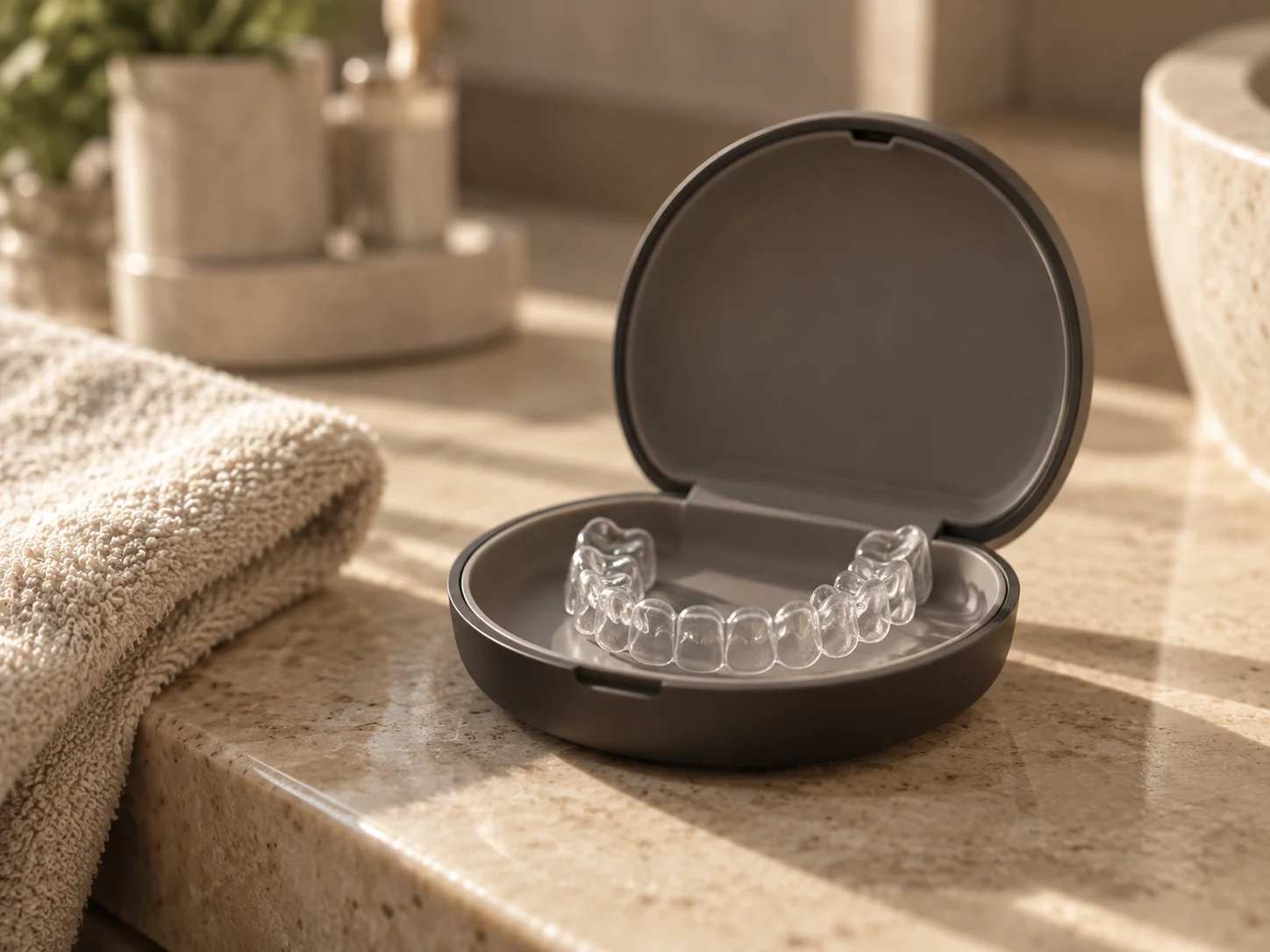
If you are travelling, eating out or simply away from home, a dedicated aligner storage case is also very useful. Aligners are small, clear and surprisingly easy to lose or accidentally throw away when wrapped in a napkin, so keeping them in a proper case whenever they are out of your mouth is a simple habit that can save a lot of trouble.
See your hygienist during orthodontic treatment
I usually recommend seeing your hygienist more regularly while wearing braces or aligners, particularly if plaque is building up around brackets, attachments or the gum line.
We can identify the areas you are missing, adjust your technique and make sure you have the right brushes for your teeth as they move.
Once orthodontic treatment is complete and everything is healthy and stable, you can usually return to your usual hygiene recall.
What if I have a fixed retainer afterwards?
Finishing orthodontic treatment does not mean the cleaning stops.
A fixed wire behind the front teeth can collect biofilm and calculus, so the area needs daily attention.
Depending on the space beneath and around the wire, floss, Super Floss or an interdental brush may work best.
There is no single TePe colour that suits everyone. Your clinician or hygienist can show you the right technique and measure which brush size fits each area, as these spaces can change during and after orthodontic treatment.
The most important thing to remember
Braces and aligners can give you a beautifully aligned smile, but we also want the teeth and gums underneath to stay healthy throughout the process.
The routine is simple: brush thoroughly, clean between the teeth, use the extra tools where needed, keep removable aligners or retainers clean, and attend professional maintenance regularly.
The better you look after your teeth during orthodontic treatment, the healthier the smile will be when the braces or aligners finally come off.