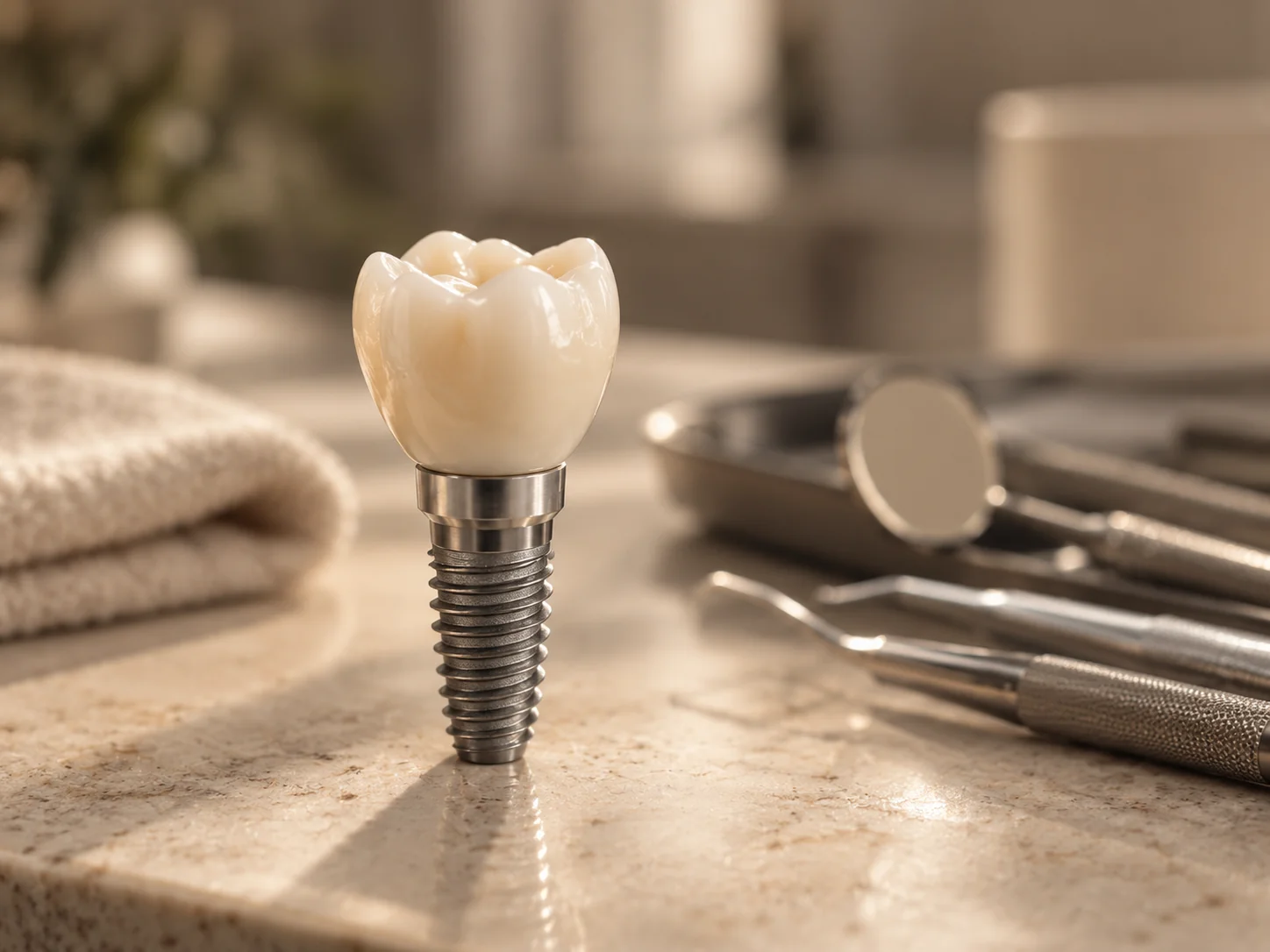
Dental implants are designed to be a long-term solution, but they still need daily home care and regular professional maintenance — just like your natural teeth.
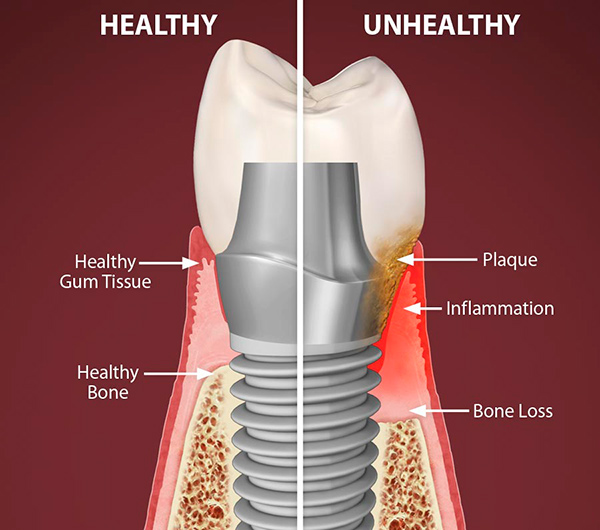
An implant itself cannot develop a cavity, but the gum and bone supporting it can become inflamed and diseased if biofilm is allowed to build up around it.
I often compare an implant to an expensive car — it may be built to last, but it still needs regular care and maintenance.
Treat your implant like a natural tooth
Your implant should be part of your normal brushing routine. Brush twice a day, paying particular attention to where the implant crown meets the gum. An electric toothbrush is absolutely fine to use around implants.
The aim is not to scrub harder. It is to remove biofilm thoroughly and consistently, especially around the gum line.
And just like natural teeth, brushing alone is not enough — the areas between the teeth and around the implant need to be cleaned every day too.
One of the worst things you can do is avoid cleaning around an implant because you are worried about damaging it. Biofilm left around an implant is exactly what we want to prevent.
Interdental brushes are one of the most important tools
Interdental brushes such as TePe brushes are one of the most useful tools for cleaning around implants.
The correct size matters — the brush should make gentle contact with the surfaces without needing to be forced through.
Your clinician can measure the spaces around your implant and show you exactly which sizes to use.
Don’t forget the areas your normal toothbrush misses
A single-tufted brush is particularly useful around the gum line, behind implant crowns and around areas that a normal toothbrush struggles to reach.
Use small, controlled movements around where the implant restoration meets the gum.
If the gum bleeds when you clean it, don’t simply stop cleaning the area — persistent bleeding is a sign that it should be assessed.
What if I have an implant bridge?
Cleaning underneath an implant bridge is especially important.
Depending on its design, you may need a combination of interdental brushes, a single-tufted brush, specialist floss or a water flosser.
The best tools depend on the shape of your bridge, so ask your clinician to show you exactly how to clean underneath it.
What happens if an implant isn’t cleaned properly?
Biofilm can build up around an implant in much the same way as it does around a natural tooth.
Peri-implant mucositis is inflammation limited to the gum around the implant and can often be reversed when the biofilm is brought under control.
If the inflammation progresses and starts affecting the supporting bone, this is called peri-implantitis. Once established, bone loss around an implant can progress quickly, which is why early detection and regular maintenance are so important.
Bleeding, redness, tenderness, swelling, discharge or a change in the gum around an implant are all reasons to have it checked.
Implant disease can sometimes progress without much pain, so waiting until an implant hurts is not a good way to judge whether everything is healthy.
Professional maintenance matters too
Just like natural teeth, implants need both good home care and regular professional checks.
Your clinician can monitor the gum around the implant, check for bleeding, identify areas you may be missing and professionally remove biofilm and deposits.
How often you need maintenance depends on your individual risk, particularly your oral hygiene, previous history of gum disease, smoking and diabetes.
Guided Biofilm Therapy with AIRFLOW can also be particularly useful for gently removing biofilm around implants as part of professional maintenance.
The most important thing to remember
An implant may be artificial, but the gum and bone supporting it are very much alive.
The best way to protect an implant is surprisingly simple: brush it well, clean between and around it every day, use the right tools for your individual restoration and attend regular professional maintenance.
The worst thing you can do is assume that because an implant cannot develop a cavity, it does not need cleaning.
Look after your implant as carefully as you would your natural teeth — and with good home care and regular professional maintenance, we give it the best possible chance of staying healthy for many years.